Look beyond the first visit
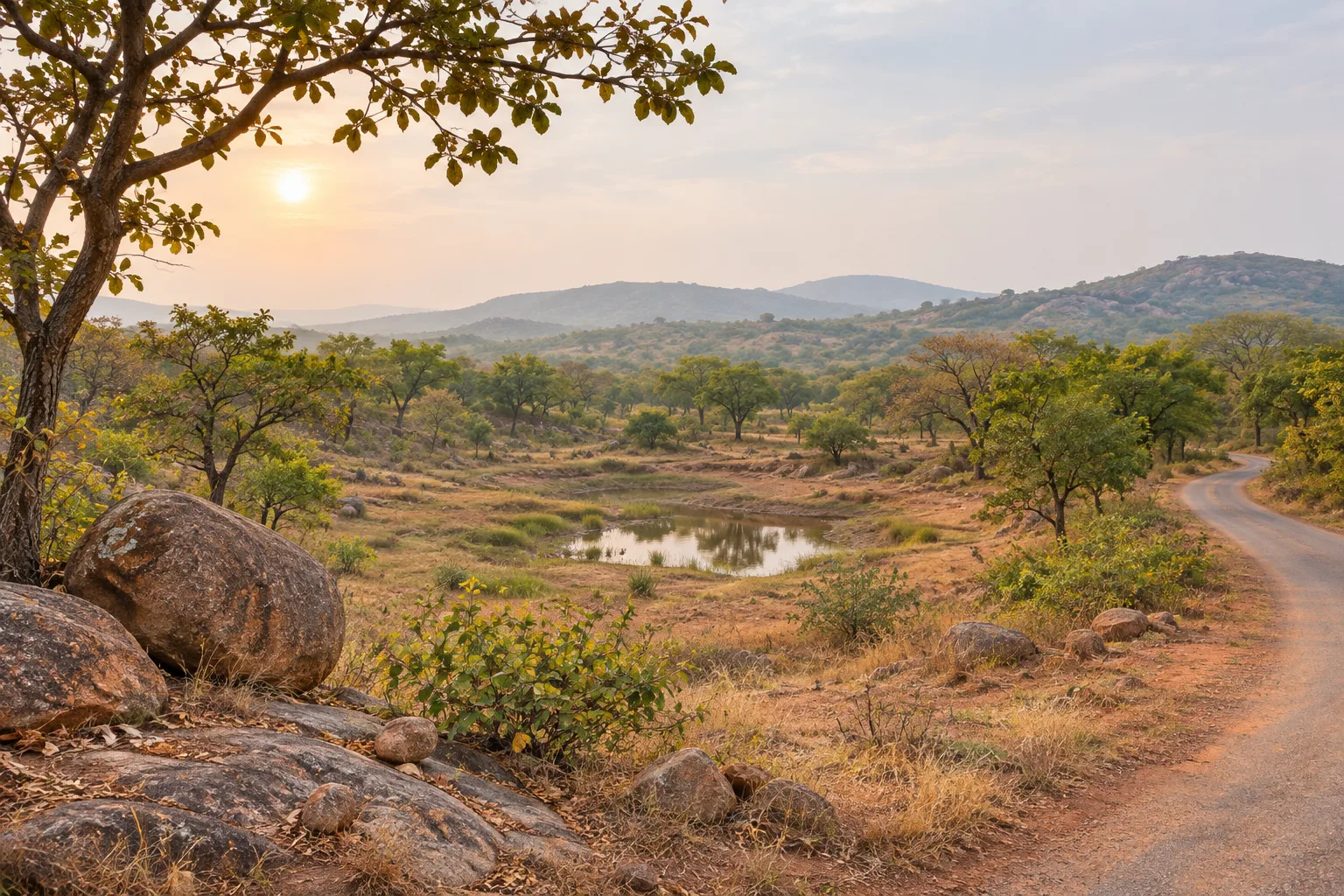
A plot can feel wonderfully peaceful during a Sunday visit. That is a reason to investigate it, not enough reason to select it. Before a wellness community is designed, we need to understand the place across different hours, seasons and possible changes around it.
For Wellness Homes, the location question comes before the amenity list. A landscaped entrance cannot answer concerns about a future freight route, a difficult water supply or an impractical trip to family. The following is our proposed screening approach. It is not a recommendation of any locality or a substitute for professional checks on a specific property.
Read the surrounding plan, not only the boundary
HMDA provides official master-planning material, including the Master Plan 2031, as a starting point for understanding planned land use. [1] A serious review should identify which authority and current plan apply to the exact parcel, then check relevant updates and permissions with qualified local advisers.
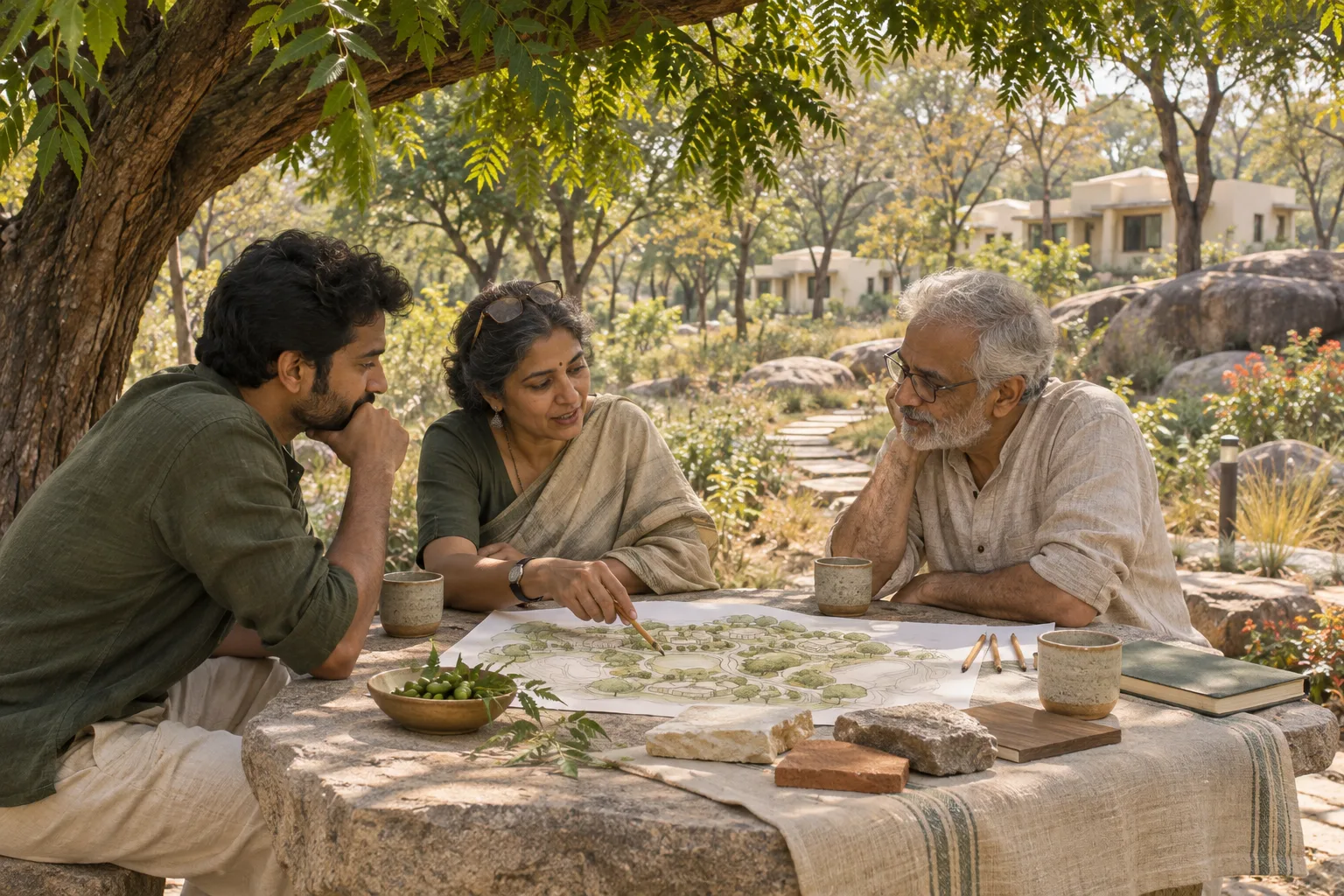
Our location shortlist should include a map of surrounding activity: existing industries, industrial proposals, logistics areas, major roads, construction and other uses that could affect daily life. Announced projects and approved changes should be recorded separately. Neither a marketing presentation nor a news headline establishes the final position.
We would ask what a proposed road improves and what it may bring with it. Better access and more traffic can arrive together. The question is not whether development is always good or bad, but whether a location still fits the community’s priorities under more than one plausible future. Uncertainty should remain visible rather than being converted into a confident prediction.
Treat air quality as an investigation
CPCB’s National Air Quality Index service provides readings by monitoring location and time. [2] It is a useful part of understanding a wider area. Our screening approach would not treat a distant station’s reading, or one clean afternoon, as proof of conditions at a parcel.
We would combine available monitoring information with repeated site observations and professional advice about appropriate local measurements. Neighbouring combustion, dust, traffic and changing activity deserve attention. A site record should say when observations were made and what they cannot tell us.
Trees and open land are attractive features, but we should not describe a place as pollution-free because it looks green. The same principle applies to noise. Several visits, including times when nearby activities are operating, could reveal questions that a single carefully timed inspection misses.
Water needs quantity, quality and a fallback
The Central Ground Water Board publishes groundwater-quality material for Telangana. [3] Regional information can help frame questions, but it does not establish the suitability or reliability of an individual borewell. Each candidate property would need its own evidence and competent assessment.
Our proposed review would examine the intended water sources, permissions where applicable, seasonal reliability, appropriate testing, treatment and ongoing operating costs. The demand estimate should include homes, visitors, landscaping and any food-growing area. A garden or a retreat programme should not be added as if it has no effect on the water budget.
We would also ask where stormwater moves and how wastewater would be managed. A reassuring answer needs more than “there is a borewell” or “we will harvest rainwater.” Alternatives should be costed and their limitations stated, including what happens during a prolonged disruption.
Make access practical for real lives
A community near Hyderabad should be evaluated through actual journeys. How difficult is a routine medical appointment? Can family visit without turning every meeting into an expedition? What happens if someone no longer wishes to drive? Travel time belongs beside land cost in the comparison.
For medical access, we would assess appropriate facilities and emergency arrangements with professional input, rather than rely on the distance to any building labelled a hospital. An attractive setting is not a replacement for necessary care, and an early-stage residential concept should not imply that clinical services are already arranged.
We should also consider delivery access, staff travel and the needs of visitors. An approach road can be comfortable for a private car in dry weather and still raise questions for other users or conditions. Testing those assumptions before choosing land is less disruptive than discovering them after a community has formed.
Use reasons to decline as well as reasons to choose
A shortlist should include explicit reasons to rule out a location, not just scores for attractive features. Unresolved access, water or planning questions should not disappear because another category receives a high score. Some uncertainties require investigation; others may make a property unsuitable for our purpose.
No site is being endorsed in this article. We want to hear what you would find difficult to compromise on: nearby family, a dependable hospital route, quieter surroundings, shorter travel or a realistic monthly budget. Those priorities can shape a location brief before anyone falls in love with a view.
Sources & further reading
- HMDA — Master Planning 2031
- CPCB — National Air Quality Index
- Central Ground Water Board — Annual Ground Water Quality Report of Telangana 2023–24
Sources checked 23 November 2026. Links support the evidence discussed; our project proposals remain exploratory.