Begin with an ordinary Tuesday
Imagine an ordinary Tuesday, rather than a holiday. You have work to finish, someone to care for, a meal to prepare and perhaps very little enthusiasm for another organised activity. Would the place you live make that day easier? Could you take a short walk in shade, find a quiet corner, or share a cup of tea without arranging a major outing? Those are the kinds of questions behind Wellness Homes.
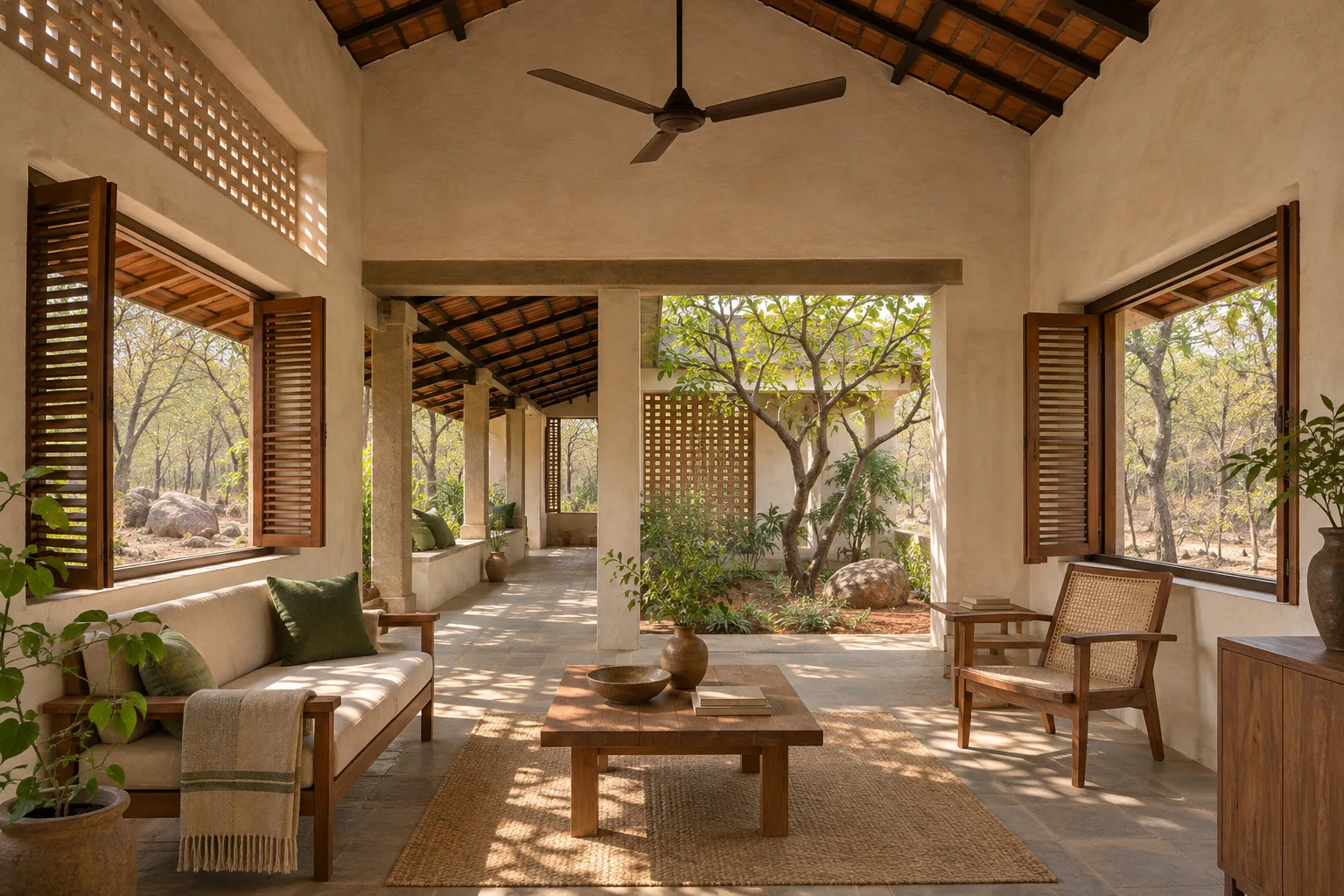
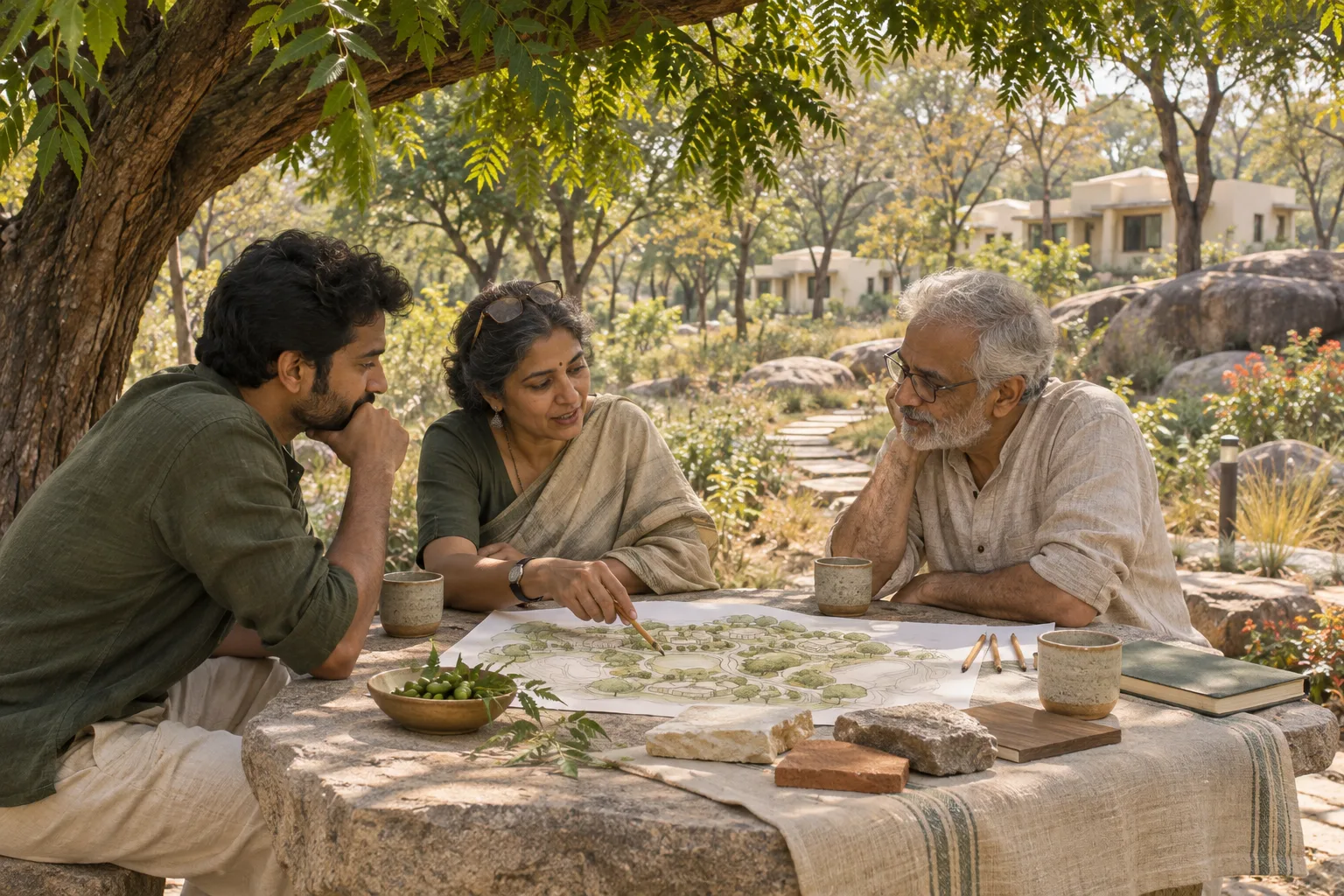
We are exploring a nature-rich community near Hyderabad where thoughtful homes, food growing, movement, rest and friendship fit into everyday life. It is an early-stage idea. We have not settled the land, the budget, the ownership structure or the terms of participation. The images on this website illustrate possibilities; they are not photographs of a completed development.
That distinction matters. An attractive picture can help start a conversation, but it cannot answer whether the water supply is dependable, how a place will be maintained or whether the people living there will enjoy being neighbours.
A home first, with room for different lives
Our starting point is a place to live well, rather than a schedule everyone must follow. Some people may want a permanent home. Others may prefer occasional stays, a retreat or simply a connection to the community. We are listening to these different needs before deciding whether they belong in one project or require separate arrangements.
A community should make company available without making privacy difficult. A shared meal can be an invitation. It should not become a test of belonging. Someone who enjoys solitude, works irregular hours or has caring responsibilities should still feel at home.
We also want to ask what happens when circumstances change. A home that suits someone today may need to accommodate reduced mobility, a visiting parent or a quieter routine later. These are design and operating questions to investigate, not services we can promise at this stage.
Start with the basics, then choose the extras
It is easy to fill a wish list with a pool, a greenhouse, a recovery studio and clever technology. The harder work is deciding what deserves to come first. We would like to test a simpler order: a suitable location, reliable water and sanitation, comfortable homes, safe routes for movement, and shared spaces that people actually use.
A garden might supply some produce and give people a shared activity. It should not be presented as guaranteed food independence. A retreat might eventually contribute income. It should not be assumed to pay the community’s bills before demand and operating costs have been tested.
Likewise, a sensor can show a reading; it does not maintain the building. Every feature needs an answer to three ordinary questions: who looks after it, what does that cost, and what happens if it stops working? A smaller set of well-maintained facilities may be more useful than a long list of amenities.
The community needs rules as well as goodwill
Friends can agree on a vision while disagreeing about noise, visitors, pets, shared spending or the use of common space. We want to bring those disagreements into the discussion early. Clear decisions about privacy, responsibilities, budgets and conflict resolution would be part of the project’s foundation.
Recurring costs deserve as much attention as construction costs. Before any commitment, people would need understandable information about maintenance, staffing, replacement reserves and the financial consequences of empty homes or fewer visitors than expected. We are not quoting a monthly fee, a property price or a return on investment because the work needed to support those numbers is still ahead.
There should also be clarity about how someone leaves or changes their involvement. An appealing invitation is incomplete without understandable boundaries and exit arrangements. These would need proper professional advice and documentation if the project proceeds.
Your opinion is enough for now
At this stage, we want useful conversations. What appeals to you? What would make the idea impractical? How often would you use a place outside the city? Which facilities matter, and which would you happily do without? A thoughtful objection can save more time and money than an enthusiastic response that leaves the difficult questions untouched.
You do not need to promise money, volunteer your time or decide whether you would join. Reading the journal and sharing a perspective create no commitment. If you choose to submit a private opinion on the website, its form explains what information is saved and who can see it.
This journal is where we will explore the decisions behind the vision: healthier indoor environments, community life, food growing and responsible site selection. It will not pretend that a particular building or lifestyle guarantees health or longevity. Our aim is to make the questions clearer, test the possibilities and earn confidence through the quality of the work.
Sources & further reading
This is a statement of our current intentions and open questions, rather than a claim of proven outcomes.