Start with an ordinary afternoon
Imagine coming home on an uncomfortable afternoon. The bedroom is hot, the kitchen smell has travelled through the house, and a neighbouring pump starts just as you sit down. A beautiful yoga deck would not resolve those problems. The everyday performance of the home needs attention first.
That is the starting point we propose for Wellness Homes: judge a place by the hours people actually spend there. Where can someone read quietly? What happens when windows must stay closed? Can a person rest without depending on everyone else’s schedule? These questions are less photogenic than a clubhouse, but they deserve a place in the first design brief.
Air quality is a system, not an appliance
The US Environmental Protection Agency describes three complementary approaches to indoor air: control pollutant sources, improve ventilation, and use filtration where appropriate. It also cautions that opening a home to outdoor air requires attention to outdoor pollution. An air cleaner is not a substitute for dealing with the source of a problem. [1]
For our proposed community, that suggests asking an engineer to design cooking extraction, bathroom exhaust and fresh-air provision together. We would want to understand where air enters, where it leaves, and who maintains the equipment. A filter that nobody can obtain or replace is a weak foundation for a long-term promise.
A useful resident handover would explain the choices in plain language: what to run during cooking, when to use windows, what the indicators mean, and whom to contact when something fails. We would rather offer a system people understand than a dashboard full of unexplained readings.
Design for comfort through the day
WHO’s Housing and health guidelines consider excessive indoor heat alongside other housing conditions that affect health. They also connect housing with existing guidance on air, water and neighbourhood noise. That broad view is useful: the home is a collection of interacting conditions, not a single wellness feature. [2]
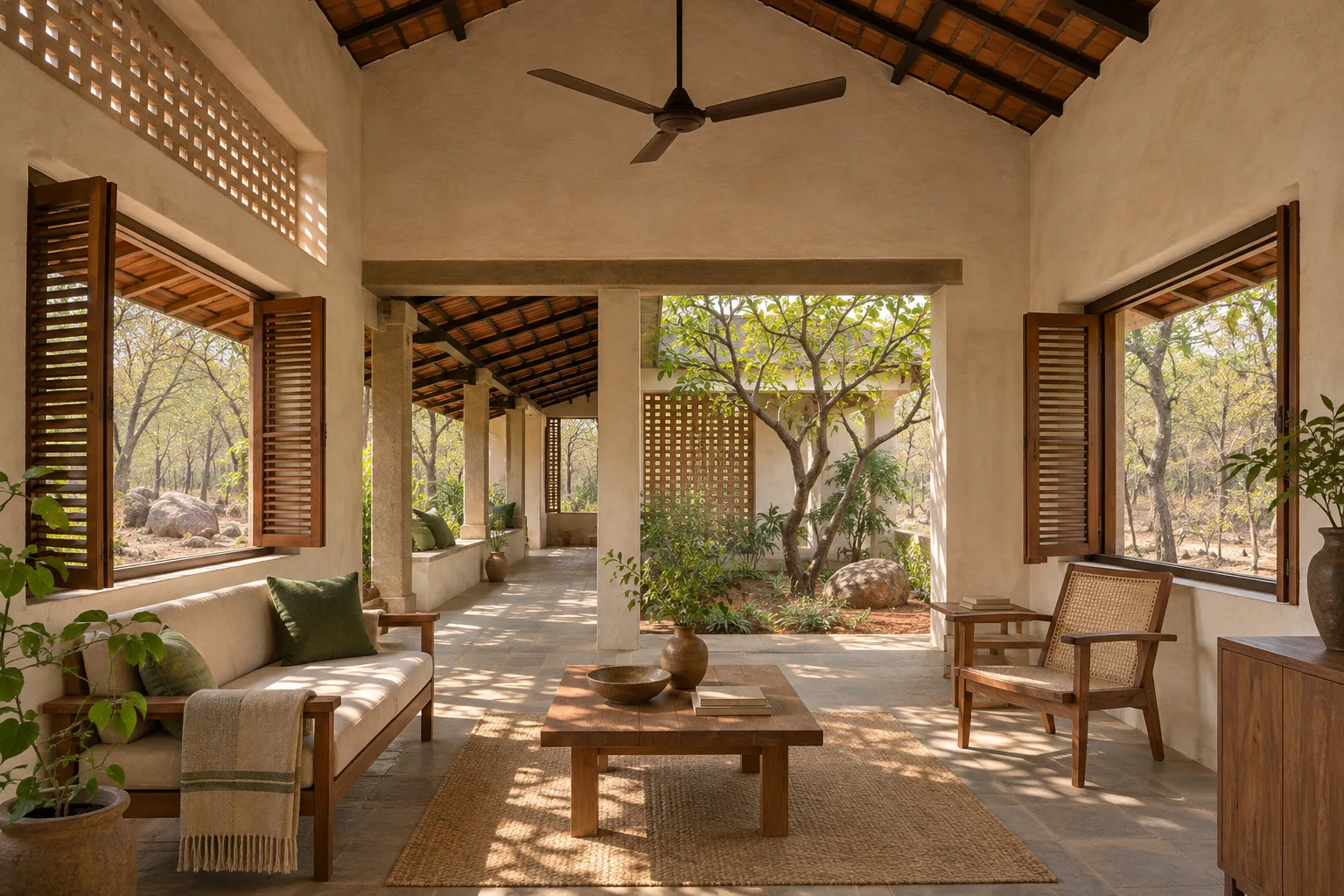
Our design brief should test shaded outdoor routes, roof and wall construction, window placement and practical cooling options under local conditions. A veranda that works in a rendering may be uncomfortable at the time someone actually wants to use it. Bedrooms, kitchens and shared rooms need their own assessment rather than one assumption for the whole property.
We should also ask what remains usable during maintenance or a power interruption. This is a planning question, not a promise of complete independence from utilities. Backup arrangements have costs and limits that should be visible before residents are asked to pay for them.
Make quiet an explicit requirement
Quiet should not depend entirely on polite neighbours. Our proposed design review would examine the relationship between sleeping rooms, gathering spaces, service areas and vehicles. It would also ask how sound travels between adjoining homes and through doors and windows. An attractive shared courtyard needs rules about events as well as careful placement.
The same thinking applies indoors. Some residents will work from home; others may rest during the day. A household should not have to choose between joining community life and having a private, restful room. We would treat those different routines as normal design requirements, not exceptions to be accommodated later.
Keep the maintenance promise realistic
Before selecting any system, we should be able to answer four questions: who operates it, how it is checked, what replacement costs, and what happens if the preferred supplier disappears. Those questions apply equally to air filters, water treatment, pumps and building controls.
Technology can be useful when it answers a specific question and leads to a clear action. It should not turn the home into a permanent health examination. A resident ought to be able to understand essential controls, choose reasonable privacy settings and get help without becoming a technical specialist.
What would you put first?
Wellness Homes remains an idea under development. These are proposed priorities, not confirmed specifications, certifications or claims about an existing property. Before investing in special amenities, we want to understand which everyday problems people most want a better home to solve.
Would you prioritise a quieter bedroom, an easier walking route, more dependable indoor comfort or clearer maintenance costs? Tell us about a feature in your current home that works well, and one that repeatedly gets in the way. Specific experiences are more useful at this stage than a wish list of impressive equipment.
Sources & further reading
Sources checked 23 November 2026. Links support the evidence discussed; our project proposals remain exploratory.